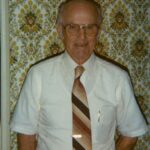
Anthony Kotchi (1913-1997)
Early South Milwaukee as seen by Tony Kotchi and recorded in his oil paintings.
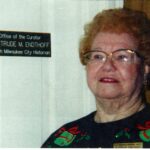
Gertrude Endthoff
Curator and City Historian, 1984-2004
Interpreted with historical significance by Gertrude Endthoff, Curator and City Historian from 1984 to 2004
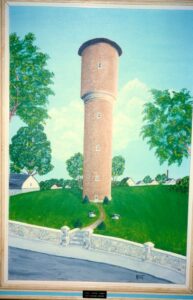
Standpipe (Water Tower)
A brick standpipe (water tower) on Milwaukee Avenue was built in 1895 on the hill between 12th and 13th Avenues on Milwaukee Avenue. The standpipe was used to lift the water from the intake for delivery rather than for the storage of water. When the water system was installed in the new city it provided equalized pressure on the water systems of the city businesses and residential area and some factories like Stowell Manufacturing (foundry). Bucyrus-Erie, Badger Malliable and Line Material had their own water supply via drilled wells.
The property where the Standpipe was erected was formerly the location of the lavish residence of W. P. Hatch who operated Hatch Cutlery Company. Found in the vicinity of the Bucyrus Club which evolved into the Community Center and currently the Bucyrus Club/Industrial Museum (Bucyrus) on 12th Avenue in 2025. At one time it was planned as the city’s recreational center known as Lake View Club House but was a financial disaster. Walter Hatch, President of Hatch Cutlery renovated the building and used it for a residence until 1893 when a drastic blaze in March 1893 destroyed the Hatch residence. Also, the same evening several other fires broke out in the city. This brought about a change in city government to provide more water pressure and improvements to the fire department.
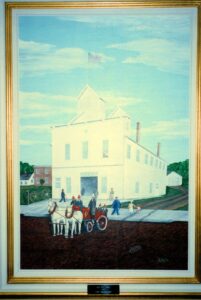
The Fire Department
The early fire department before 1890 was primarily a hose cart, pumper and a volunteer bucket brigade. The Fire Department was primarily a volunteer group of people uniting to help out in time of need. The bucket brigade was the fire quenching force used. Water from the creek or individual wells was carried, or passed along a line of men from the water source to the blaze. Buckets of water were passed from person to person to the nearest the blaze who threw it on. Empty buckets were returned by another line. Later a pumper and hose cart were used to help provide water faster. Much later, elevated tanks of water were maintained in vulnerable locations. A hose cart was moved to the tanks and connected permitting gravity to force the water from the tank to the blaze. In later years, horse drawn water tanks were pulled at the highest horsepower to the fire and a hand pumper system was used to pour water on the fire or building. Factories had their own fire departments and volunteers trained to man it.
The city’s Fire Department building was constructed in 1893 to house the tank wagon, fire horses, hose carts and other equipment. A corp of firemen stayed at the fire house to care for the horses and equipment and to be on-call. This was done at first by ringing of a large brass bell. Later by a whistle, a siren or bell placed on a high pole so it could be heard. Different clangs from the bell told where the fire was as did different blasts of the whistle. This told the volunteer firemen where to report. At time of a fire, volunteers dropped what they were doing and ran to the location to help.
In winter, the water often froze in the hoses, also in the pipes to the residences. The water intake at the lake periodically froze creating another problem. The clothing of the firemen often became covered with ice and were uncomfortable. Teams were in readiness at a moment’s notice. The harnesses were on rolls over the horses and could be dropped down on their backs. Each man had a job to do for the fastest takeoff.
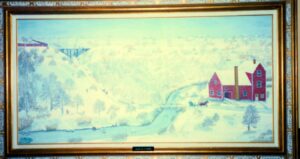
The Wooden Trestle on Mill Road
The Wooden Trestle on Mill Road
This interesting scene just off Sixth (6th) Avenue shows the bluff along Oak Creek, the wooden trestle, the creek, the wagon bridge and the Fowle Grist and Saw Mill.
The railroad trestle and tracks were built to the lake with the hope (intent) that Oak Creek could build and maintain a harbor larger than Chicago’s. One spur of the line runs to Stowell Manufacturing, now Wisconsin Appleton Electric Company. This location was one of the early foundries in the area. Making such things as farm wagons, farm equipment, and later bicycles were built for a few years. Wisconsin Appleton Electric Company made electrical wiring and equipment for line building and bigger electrical equipment.
This beautiful snowy embankment shown in the 1850’s attests to the glory and joy of sled riders, skiing, coasting and belly flopping on wintery nights on these bluffs for young and old of the time. Skates, Flyer sleds, skis and taboggans were used when the ice was cleared on the lagoon. The lagoon provided many hours of enjoyment for local youngsters.
Lagoon (Picture Missing)
In 1943 as part of Works Progress Act (WPA) under President Theodore Roosevelt, money was used to improve areas in need and to provide work for unemployed and needy people. Wages were paid from $0.25 to $0.50 per hour. The dam at the lagoon was one of those projects.
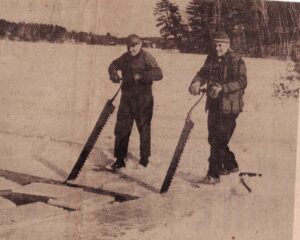
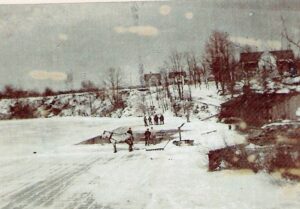
Besides winter entertainment enjoyed by the community, the lagoon also provided ice for summer cooling. Herman Groto had a crew of ice cutters on the lagoon in the coldest part of winter to saw blocks of ice for summer use. The ice was cut or sawed in large blocks, usually 500 pound chunks then hauled away from the saw mills to be stored in stacks covered with sawdust in and around each layer then stored in wooden buildings. The ice men cut the ice with ice saws in winter pulling it out of the pond by using trams of horses that had ice shoes so they did not slip and had traction for pulling. The ice was hauled to the ice house for storage. Ready for home delivery at warm times.
Before delivery the sawdust was washed off and the blocks were cut into 100 pound pieces which were cut to the size of your ice box. You placed a card in the window for the iceman if you needed ice. The card had four (4) sides each indicating the amount of ice needed (25 – 50 – 75 – 100). The number down was what was delivered and placed in the family’s ice box.
In summer, the ice man came around town with his horse drawn wagon and would deliver 25, 50, 75 or 100 pounds of ice to put into the individual ice boxes around town. Ice boxes precluded refrigerators and freezers. Later ice was delivered to homes by truck. On hot days, boys and girls liked to follow the ice wagon and beg for ice chips. If the pan under the ice box at home wasn’t checked often enough, the ice melted and would often run over. What a wet mess!
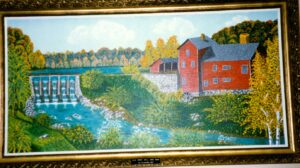
Grist Mill, Saw Mill, Dam at the Lagoon
Wooden gates lifted the dam manually with chains.
Hitching sheds
Changed hands, Ahren-Bunn, yellow mill
The mills were working in 1842. The Grist mill was on the top floor and the saw mill downstairs. In 1962 the only remaining part of the mill was the chimney which was razed. Now the grinding stones are marked and permanently placed on either side of the lagoon spillway on Mill Road. The millstones are the only part of the original mill remaining. Plaques were placed in 1998 on each side to mark these remains of early history. South Milwaukee Flour Mill was operated at this site until 1930. This dam is possibly the oldest man-made artifact in the area.
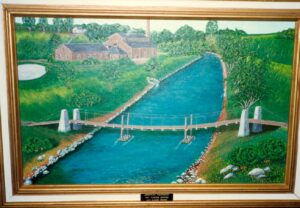
The Water Filtration Plant near the mouth of Oak Creek
The water filtration plant near the mouth of Oak Creek was the first in the area and the suspension bridge over the creek is the subject of this picture. The suspension bridge is a footbridge often a playground of energetic children who could cause it to sway perilously. So, supports were put under it so it couldn’t happen so readily. At one time, tug boats and scows traveled up the mouth of the Oak Creek to load bricks or lumber for the building trade in Michigan. One of the tugs was named the “Julianna” for one of John Fowles daughters. Another was the “Monkey Skunk”. The mouth of Oak Creek was much wider and deeper than it is today. Just look at the bluffs on each side of the steam boat in the picture. Brickyards were operated in Oak Creek by: Sanford Grover, Horace Fowle and Horace Blake in the 1850’s through 1900.
To the west of the filtration plant was one site of a brick yard. Many bricks were made in this area. The red clay fired into a creamy yellow brick. These can be seen in houses, factories and churches for many miles around. Look for those old building. They are a part of history. This brick was known as Cream City Brick because of results of firing. It was made in large enough quantities so it was shipped by scows across the lake to cities in Michigan and the Chicago area.
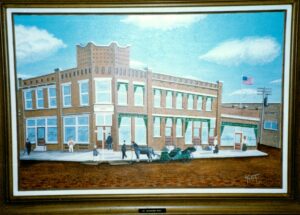
South Milwaukee Bank and Post Office
The South Milwaukee Bank Building was on the southeast corner of 10th and Milwaukee Avenues. The building had a corner entrance. The bank vault was under the building and is still there to this day (2025). It’s located under the current plaza. There were offices on the second floor occupied by an attorney, Delos Fowle. He was the son of Alfred Fowle.
The US Post Office was located on the east side of 10th Avenue until 1933 when the current building was constructed on the west side of 10th and Michigan Avenues. Roys Lunch was located next to the then Post Office for many years before a new building was constructed in the 1960’s on Madison Avenue named Lloyd’s Lunch. The Lloyd’s Lunch building is still standing today (2025). Next to Roy’s was T.M.E.R.&L. Company on 10th Avenue. The “turn around” for the transit cars was located where Welbes Dairy pasture was located for several years because the street was wider than the other area streets. Later, the area became a parking lot for Bank One which is now part of Tri-City Bank (2025).
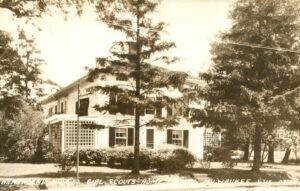
Hawthorne House (Picture Missing)
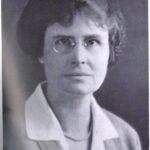
Amelia Elmore Morison
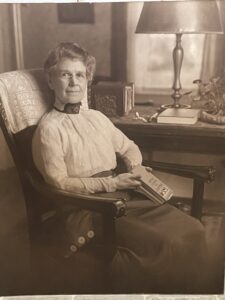
Harriet (Cook) Elmore
Hawthorne House – Built in 1851 by Henry and Apolonia Fowle. Henry was a son of John and Sarah Fowle and was among the first settlers to arrive in the Oak Creek Territory [now South Milwaukee], arriving in the spring of 1835 from Wadhurst, England. Apolonia was the daughter of Reverend Abner Wood, and is a descendant of two signatories of the 1620 Mayflower Compact.
Amelia Elmore Morison served as Commissioner of the Milwaukee Girl Scouts, Inc. for many years and was on its board of directors for over 25 years. When the Morison family moved out of their home at 300 Hawthorne Avenue (known as Hawthorne House), they donated it to the Girls Scouts in memory of Amelia’s mother, Harriet (Cook) Elmore, to be used as an overnight camp house. The house is now a private residence.
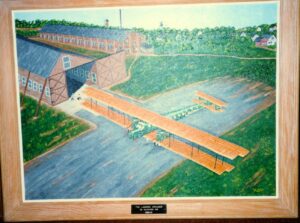
Lawson Airliner
Lawson Airplane – 1920 – 1921
Alfred Lawson, a pilot and aero engineer, rented a warehouse at 903 Menomonee Avenue to build an airplane. The building used by Lawson to build the airplane was a long building having outside supports rather than center piers making it desirable for working on a large plane. He began working on an airliner which was intended to give passengers and air mail service to major United States cities. In a warehouse at 9th and Menomonee Avenues his work progressed on this airplane. Alfred Lawson had the first United States Air Mail contract to deliver mail by air. Many people in the area invested money in the venture. Shares of stock were sold in the company for $1.00 each. This plane was the largest airliner in the world at that time and was built during 1920-21. The double decked ship was designed to carry thirty-four (34) passengers. It was also built for night service having berths and toilet facilities. The cabin was sixty-eight (68) feet long and the wings had a spread of one hundred twenty-four (124) feet. Two 420 horsepower motors supplied the power.
The plane was built and ready to fly on May 8th, 1920. The weather was cold and spring was late. The shareholders were anxious for the plane to take off. The farmer had plowed the take-off field. Men running under the wings to steady it were notable to keep up on the rough newly plowed ground. It was a windy day and as the plane rose the wind caught one wing and twisted it into a light pole. This was the end of the flight, end of investments, a great disappointment and set back for what could have been a major step forward in aviation and mail service which came later in history. It was the end of the first United States Air Mail delivery. And produced many unhappy shareholders.
Alfred Lawson left the city and went to Washington D. C. where he started a movement called the Lawsonian Religion. He was a religious man of high spiritual values. Along the I-94 highway near Racine, Wisconsin is a sign reading “University of Lawsonomy.” The property owned by A. Lawson, representing his strong religious beliefs.
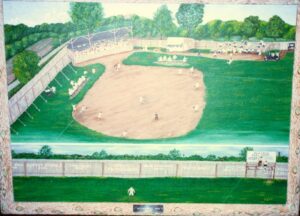
Bucyrus Baseball Park
Many hard pitched and hit baseball games were played in this ballpark located at the end of Bucyrus’ slag pile off Edgar Avenue and the Oak Creek Parkway, west of the CNW railroad tracks. Later Bucyrus-Erie dumped their foundry sand in this are (known as the slag pile). There was a grandstand off home base, a concession stand off third base and bleachers off home base with seating for several hundred fans. The field was surrounded by a wooden fence on which businesses could purchase advertising space. Advertisers included: Molthen Funeral Home, Welbes Dairy, Doerman Shoe, Wexstaff Saloon, Berthe Black-Smith, Carlson Livery, South Milwaukee Basket Factory, Wilde Jewelry, Garden Theatre, Cherry Sparkle, Grobschmidt Realty, Smoot Photos and more. The score board was managed by helpers who changed the numbers by hand.
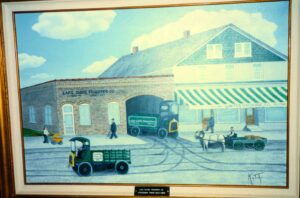
Lake Shore Transfer and Stephenson Motor Truck
The Lake Shore Transfer Company was organized in August, 1904. They had a three (3) ton truck for transferring freight and express goods to and from Milwaukee and nearby points. After acquiring a larger fleet of trucks they specialized in long distance hauling of household goods.
Across from Bucyrus-Erie crane yards, the Lakeshore Transfer Company was the work horse of industry using trucks with hard rubber tires (not inflated) to haul the heavy materials produced or needed in this city. Trucks were built in South Milwaukee in 1909-1910 by Stephenson Motor Company and by Nirschel and Brings. These trucks were used to replace and help teams of horses and workman’s backs by doing some of the heavy work. Lakeshore Transfer was located on 10th Avenue next to the railroad track spur coming from the Bucyrus-Erie yards. This area is now a vehicle storage lot (2025). Lakeshore Transfer is no longer in operation. Its building was razed in 1999 due to an unstable foundation.
The Stephenson Motor Truck owned by the Lake Shore Transfer Company was used to transport employees and families to a location on the Root River in 1917 for the annual picnic. The man holding the fishing pole was reported to the be E. Johansen.
The Stephenson truck was manufactured in South Milwaukee at a location near 11th and Davis Avenue. These trucks had layers of hard rubber over steel wheels. They were used by breweries, canneries and foundries to carry goods from place to place. In 1911 there were forty (40) employees at the Stephenson Motor Truck Company. Officers of the company were George L. Stephenson, Paul Durant, and A. E. Haldeman. This company was formed at the turn of the century. Stephenson trucks were used in many parts of the United States where trucks were needed.
Champion Motor trucks were also built in South Milwaukee about 1908-10. This factory was located at 2502 South Chicago Avenue. Because of the lack of space the company was moved to Milwaukee on Pittsburgh Street. The officers of the Champion Truck Company were: Nirschel, Walters, Brings. The truck had a chain drive. The tires were hard rubber on steel wheels. This heavy duty truck was widely used in industrial plants in many parts of the United States.
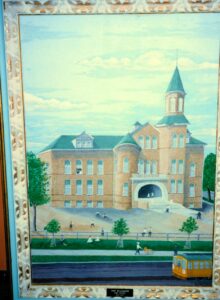
First High School Building
This building was located on Rawson Avenue near 10th Avenue built in the 1880’s. The first elementary grades were moved from North Chicago and Pine Avenues to this location in 1856. As the population needs grew, the building grew also. By 1892, four (4) years of high school had been added and a graduating class of four was recognized. The Superintendent’s office was in the first round tower on the left side of the building. The building was of cream city brick from the local brick yards. The concrete archway had a motto cast into it. It read “High School”. The Vocational School occupied part of the building on Rawson Avenue. The rest housed grades Kindergarten through 8th (eighth) grade.
Schools were built in each of the four wards by 1920’s. In 1929 the building burned and was demolished because it was deemed a complete loss. By 1913, a high school was built on 1224 Memorial Drive just off Pine Street. An annex was built on the northeast end of the high school grounds to house the Vocational School. The Vocational School moved to 13th and Michigan Avenues taking over the former elementary school. It was utilized until a new building in Oak Creek on Howell Avenue was constructed. The Michigan Avenue building was demolished due to age. Benkowski Builders purchased the property and apartment buildings are now in that location. (2025)
Notice the T.M.E.R.&L. Co car on 10th Avenue. This trolley went from Milwaukee to Carrollville and back. T.M.E.R.&L. Co translates to: Transit Milwaukee Electric Railroad & Light Company. Later known as Wisconsin Electric Power and currently known as WE Energies (2025). Their office was on Milwaukee Avenue next to the Home State Bank for some years.
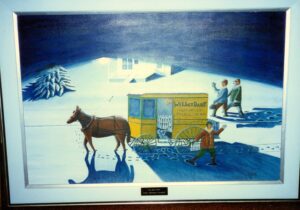
Welbes Dairy Early Morning Delivery
914 Madison Avenue was the home of Welbes Dairy. In the early light of dawn the clop-clop of milkmans’ horses and the grating of the wheels of the milk wagon could be heard on city streets and roads. The milkman delivered milk to front steps of homes and picked up the empty bottles for another trip. The cows had to be milked, the milk strained, cream separated, and bottled. Later, milk was heated to pasteurize it. The empty bottles had to be washed and sterilized at the end of the delivery trip to be ready for a new day. Cows were milked twice a day.
One location in the area was Welbes Dairy located where Bank One parking lot was; Tri-City Bank is there today (Madison and 10th Avenues) across from Lloyds Lunch. The cows were kept in a pasture in the current parking lot. There was a milking shed where milk was taken from the cows by hand or by machine. Then it was cooled, pasteurized, bottled and delivered.
Early frosty morning milkman for Welbes Dairy was out delivering milk to homes. The horse usually knew the route, also when it was time to move to the next house. The horse usually by training moved on to keeping with the milkman. Milk was delivered in glass bottles with a heavy paper cap. On cold, cold days the milk often froze causing the core of milk and cream to rise out of the bottle.
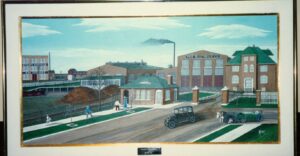
Bucyrus Steam Shovel and Dredge Company
A fine painting of the gate house office building, forge shop and foundry of Bucyrus. The company moved from Bucyrus Ohio in 1892. 1893 was a depression year and business was bad and almost left the area. About this time the Panama Canal was being dug and an order for 77 steam shovels was received. They were built and shipped to the canal area. The company was saved, workers were happy and a 4th class city about to happen. More workers were needed and the city grew as men came to work, sent for their families and built homes.
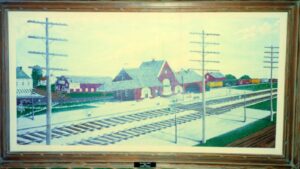
Chicago Northwestern Depot (CNW Railroad)
In 1855 the Chicago Northwestern Railroad came through this area to service the eastern shores of Lake Michigan. It was also said Oliver Rawson’s family arranged for a depot to be built on Rawson Avenue near his house and at the railroad crossing on Rawson Avenue. He and his wife requested a depot so his family could travel to Milwaukee for social affairs such as plays and operas by private railcar. As the area grew, Architect Charles Sumner Frost was commissioned in 1893 to design a depot for the city. Mr. Frost designed many outstanding depots; Chicago, Madison and Wausau to name a few. Milwaukee and 11th Avenues was selected as the location. This depot served as both a passenger and freight depot until it was abandoned in the 1980’s. The depot was eventually sold to Edwin and Shirely Benkowski (Benkowski Builders), was restored and utilized to this day for their business (2025). The public is able to tour the building. It has been listed on the National Register of Historic Sites. In 1999 a tree on Milwaukee Avenue was removed and replaced with a vintage town clock like those used for streets advertising of a jewelry store.
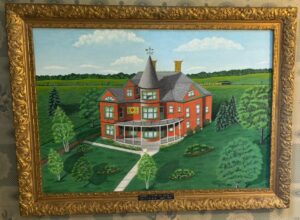
Painting of Edward Rawson Mansion by Tony Kotchi
Edward Rawson House
Edward Rawson built a house on Rawson Avenue when he married. The home was located on land bought from the United States government by his grandfather when land was sold in 1828 for $1.25 an acre. Rawson land ran from 10th Avenue to 15th Avenue. Edward did not live in this large home for many years. He died in 1921.
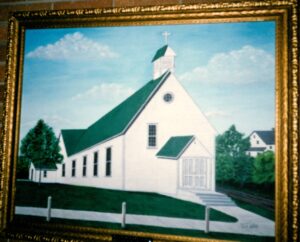
St. John’s Catholic Church
The first Saint John’s Catholic Church was a wooden building painted white. It was located at 8th and Marquette Avenues. The alley between Michigan and Marquette where the garages for the priest house are now. This building was expanded over time and was demolished due to old age. The new church was constructed across the street from the original church.
Edwards Plymouth Dodge Garage at Tenth and Rawson Avenue. (Picture Missing)
Note the milk tracks of Welbes Dairy. In 1899 Frank Welbes started delivery of milk from his farm on Nicholson Avenue. This was before pasteurization. Raw milk was carried in large metal cans. Mr. Welbes ladled out milk into the housewives’ container. The cost was about three ($0.03) cents a quart. Compare that to today’s milk prices. A horse drew the specially built milk wagon. About 10 years later (1915) a dairy was started on North Chicago and Madison Avenues because the dairy demand had outgrown the amount of milk he could produce on his farm. Milk was purchased from dairy farmers to meet his customers’ needs. In 1915, the new dairy on Madison Avenue was equipped with modern pasteurization equipment. Better facilities for cleaning, sterilizing and filling glass bottles were added. Early morning milk deliveries were made. For many years Welbes was the only dairy to serve South Milwaukee. In 1947, when Mr. Welbes retired, the dairy closed.
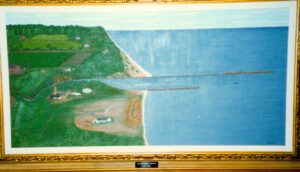
Mouth of the Creek
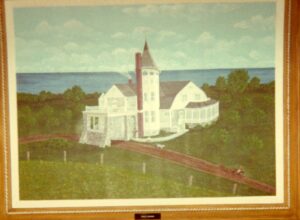
Horace Fowle Home
Mouth of Oak Creek
Much of the area was owned by the Fowle family from 1838 – 1890’s. Farms along the bluff were in an area known as Highest Point along eastern shore of Lake Michigan. John Fowle Sr. had a stage coach station in early 1840’s on the bluff near the current Milwaukee County Golf Clubhouse but it was built too close to the lake so eroded away by wind and water as the lake crept inward. In 1859 Horace Fowle built a substantial home for his bride, Ellen Thompson whose wedding dress you can see in the painting.
Horace Fowle was the first white boy and 5th son of S. & John Fowle Sr. born in Oak Creek. The first white child was a girl, Augusta Higgens, whose father was Elihu Higgens and her mother was Eliza Rawson, daughter of Oliver Rawson, another first family of the Oak Creek settlement for whom Rawson Avenue was named. The Rawsons were influential in getting the CNW railroad to come through the area. They had a private railroad car for their use to go the opera and other pleasures in Milwaukee after 1855.
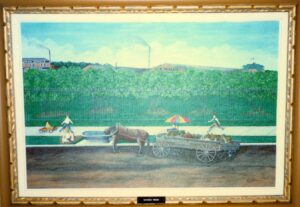
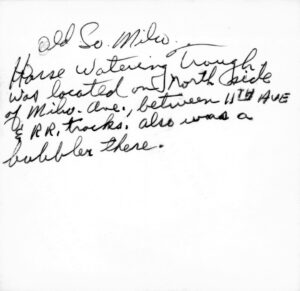
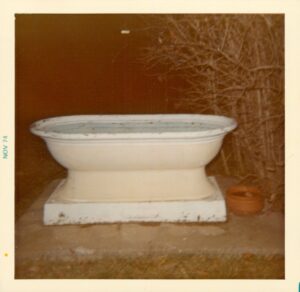
The foreground shows Milwaukee Avenue near 11th Avenue where a horse watering trough was maintained for farmers doing business in town and those driving horses. Notice the wagon loads of produce. Next to the watering trough is a “bubbler” said to have been presented to the ladies of the city by the Wisconsin Tuberculosis (TB) Association for selling the most Christmas Seals for one cent ($0.01) each in 1914. 11th Avenue to the south of this site and along Depot Park was used as a local farmer’s produce market in the summer and early fall during the 1930’s, 1940’s and 1950’s. A square park area was maintained by the CNW railroad facing Milwaukee Avenue. There were walks which extended from each corner in an “X” shape to a fountain in the center.
In the distance you see the factory smoke of Schutz Furniture Factory across the C&NW railroad tracks. The second distant stack could be Badger Mallable, a foundry on Badger Avenue east of North Chicago Avenue. Operating from 1890’s until 1970. The third stack is Bucyrus Steam Shovel and Dredge behind the hedge of greenery. On the far right hand of the painting, high on a hill is the flag flying over the high school at the site of the 1st Congregational Church and the first public school building. The cemetery contains bodies or tributes to 24 Civil War Veterans and early settlers. The foreground shows Milwaukee Avenue near 11th Avenue. A horse trough was maintained for those doing business in town using horses. Notice wagon loads of produce.
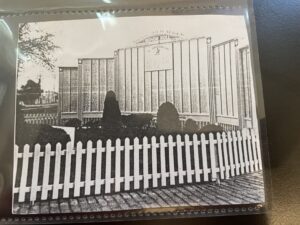
During World War II a huge board was erected to honor the servicemen from the area. Names were added as enlistments took place. Later a war memorial was placed on North Chicago Avenue just past the end of Rawson Avenue and Oak Creek Park.
First Congregational Church Cemetery (Picture Missing)
Cemetery at the site of the First Congregational Church and of the site of the first public school in the early settlement (1840). The cemetery contains bodies and tributes to 24 Civil War veterans from this area. Five new markers were dedicated in June 2000. Also, many early settlers are buried here.
Grant Park – Seven Bridges (Picture Missing)
At the entrance you will see “May the God given peace of this leafy splendor rest upon and abide with you.” “Enter this wild wood and view the haunts of nature” reads the caption over the arch as you enter the wooden bridge crossing the ravine in Grant Park. As you pass through the ravine you are in a prettier and lovelier world. The woods are deep and wild. A variety of natural growth covers the ground. Here, once you could find trilliums, hepatica, bloodroot, spiderwort, skunk cabbage, murrah marigolds, dutchman’s breech and crows violets, spring beauties and dogtooth violets, etc.
There are a great variety of trees from evergreen to deciduous. The footpaths bode to various delightful sights. There were seven footbridges which crossed low spots of the stream meandering to the lake. This is a delightful jaunt at any time of the year. Here you can find enchanting views in any season. Here you could descend from the arches over the winding paths and arrive at the shore of Lake Michigan. A climb back over similar trails is also rewarding because you have a second chance to see bits of nature that you may have missed on the way lakeward. The ravine was shaped, planned and improved as another WPA (Works Progress Act) project of the 1930’s and in 1995 was reconstructed by the Wisconsin Conservation Corp under direction of Lynn Kronschmobel. This area deserves to be protected and cherished. Now, more work is taking place under direction of James Weinstock and the Milwaukee County Parks crew. The Works Progress Administration was an ambitious employment and infrastructure program created by President Franklin Roosevelt in 1935, during the bleakest days of the Great Depression.
Foundry (Badger Avenue) (Picture Missing)
A foundry on Badger Avenue east of North Chicago Avenue which was operated as a foundry from 1890’s until 1970. Was used for metal work by Bucyrus-Erie Company. In the 1990’s the area was demolished, the soil checked and a residential complex was built on the land known now as “Badger Place” with very nice four (4) unit apartments with garages.